
Marketing
Content Writing in the Age of AI: How to Write for Humans and AI Search

Think about the last thing you bought because a friend told you about it. Not an ad. Not a random Instagram post. A real person, messaging you directly, saying "you should try this."
That single message is one of the most powerful forms of marketing that exists today. And it happens completely outside the reach of any analytics dashboard.
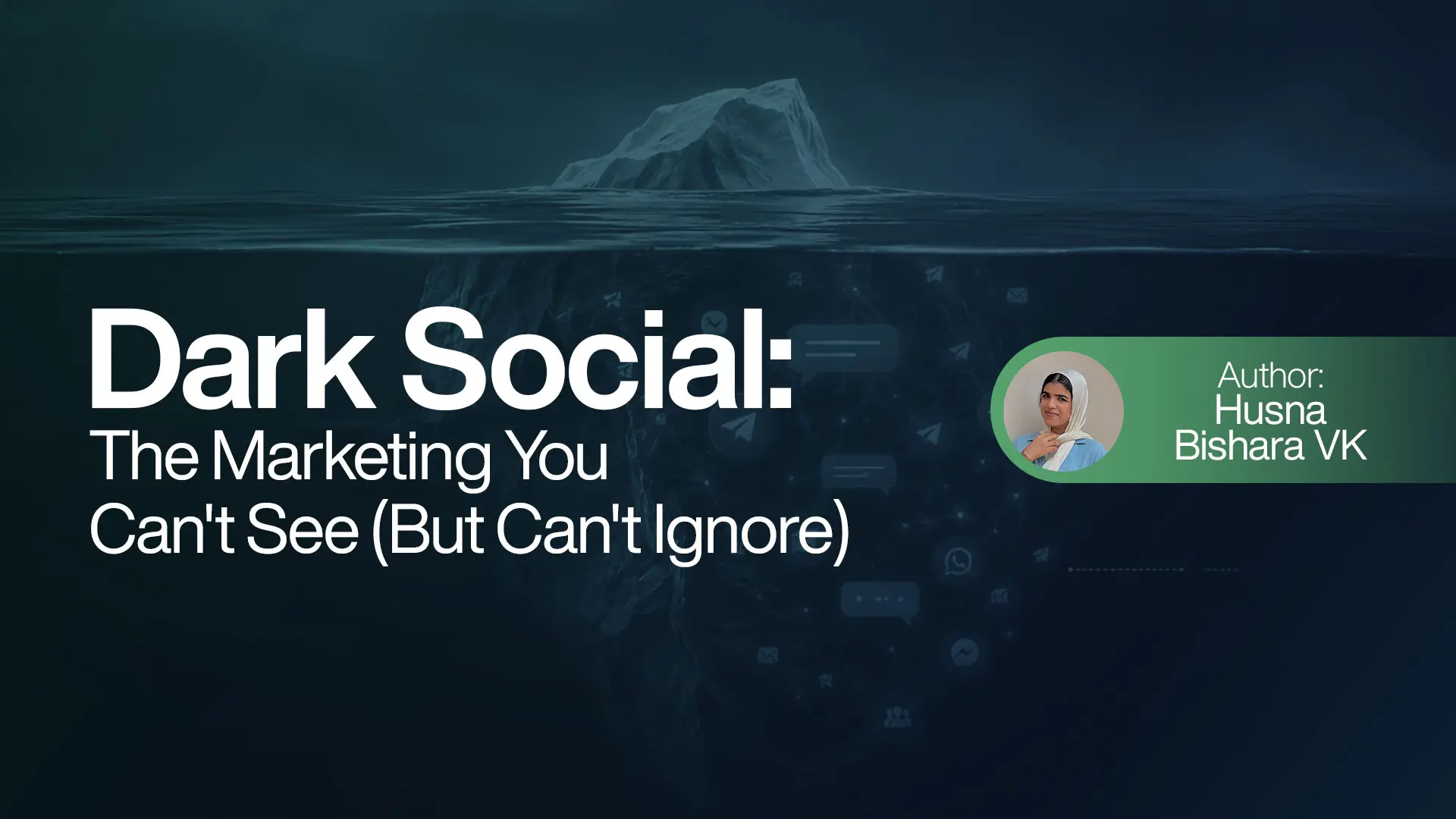
This hidden world of private sharing has a name: dark social. It lives inside WhatsApp chats, Telegram groups, emails, and DMs, and it quietly shapes what people buy, watch, and trust, long before they ever land on a website.
If you're learning digital marketing, this is one of those topics that separates people who just "post content" from people who actually understand how customers make decisions.
The name sounds scary, but there is nothing dark or shady about it. It simply means content shared through private channels instead of public ones.
Public sharing looks like this: you post something on your Instagram feed, and it gets likes and comments that everyone can see.
Dark social looks like this: you send that same post directly to one friend on WhatsApp, and nobody else ever knows it happened.
Some common dark social channels are:
A journalist named Alexis Madrigal gave this idea its name back in 2012. While digging into website traffic data, he kept spotting visits that had no clear source. People weren't arriving through ads or search results; they were clicking links friends had sent them one-on-one. Since no tool could trace where those clicks began, they all got dumped into a vague bucket called "direct traffic," hiding the fact that a real person's recommendation had actually driven that visit.
Here's a simple truth: people are tired of ads.
We see hundreds of ads every day, so most of us have learned to scroll past them without a second thought. But a message from a friend? That's different. If your cousin tells you "this course is really good, I joined last month," you actually pay attention.
That is the real power of dark social. It runs on trust, not on ad budgets.
When someone shares your content privately, it usually means:
One quiet message between two friends can influence a decision more than a hundred public likes ever could.
In Kerala and across India, messaging apps aren't just for chatting. They're where real decisions get made.
Families plan weddings in WhatsApp groups. Friends debate which mobile phone to buy over a chat thread. Homemakers exchange recipe videos and small business recommendations with their neighbourhood groups. Someone might discover a brand on Instagram, but the actual "should I buy this or not" conversation usually happens later, in a private chat with people they trust.
This means a lot of the real influence on a customer's decision is happening somewhere marketers can't see it on a dashboard. If you only look at your Instagram or Facebook numbers, you're missing a big part of the story.
You can't fully track dark social. But you can design your content to work well within it. Here's how:
Ask yourself: would someone send this to a friend? Helpful tips, relatable stories, simple how-to guides, and short useful videos get shared far more than pure promotional posts.
Add a WhatsApp share button on your blog or website. Small buttons like this remove the extra effort of copying and pasting a link, so more people actually do it.
A WhatsApp broadcast list, a Telegram channel, or a small Instagram Close Friends group creates a space where people share things naturally with each other.
You can't see every private share, but you can add simple tracking links (called UTM links) to the content you post. This at least helps you understand which pieces of content are getting shared more, even if you can't see exactly who shared them.
Instead of only chasing likes and views, ask whether your content is building enough trust that someone would want to personally recommend it to a friend. That is the real goal.
People are becoming more careful about their privacy. More conversations are moving into private chats and closed groups instead of public feeds. As people continue to value private conversations over public sharing, this shift is likely to become even more common in the years ahead.
Public metrics like likes and comments still matter, but they only tell half the story. The real influence, the moment someone decides "yes, I'll try this," often happens quietly, between two people who trust each other.
No. Dark social just means private sharing, like sending a link on WhatsApp. It has nothing to do with anything illegal.
Not fully. But tools like UTM tracking links and WhatsApp share buttons can help businesses understand it a little better, even if they can't see every single private share.
Messaging apps like WhatsApp are used constantly for daily conversations, shopping decisions, and recommendations, which makes dark social a bigger part of how Indians discover and trust brands.
Add simple share buttons for WhatsApp and email to your website or blog posts, and focus on creating content that is genuinely useful enough for people to want to forward it.
Dark social will never show up neatly in your analytics dashboard. But it is real, and it is powerful. Every day, people are recommending products, courses, and brands to each other through private messages, and these small conversations often matter more than any ad campaign.
If you're building a career in digital marketing, understanding dark social means understanding how people actually make decisions, not just how they behave in public. And that is a skill worth mastering, whether you're managing a brand's social media, running your own small business, or simply trying to understand your customers better.
Curious how much more there is to learn beyond likes and shares? Explore CDA Academy's Digital Marketing course and start building skills that go beyond the obvious metrics.