

Marketing
How Small Businesses Can Convert New Customers Into Returning Clients

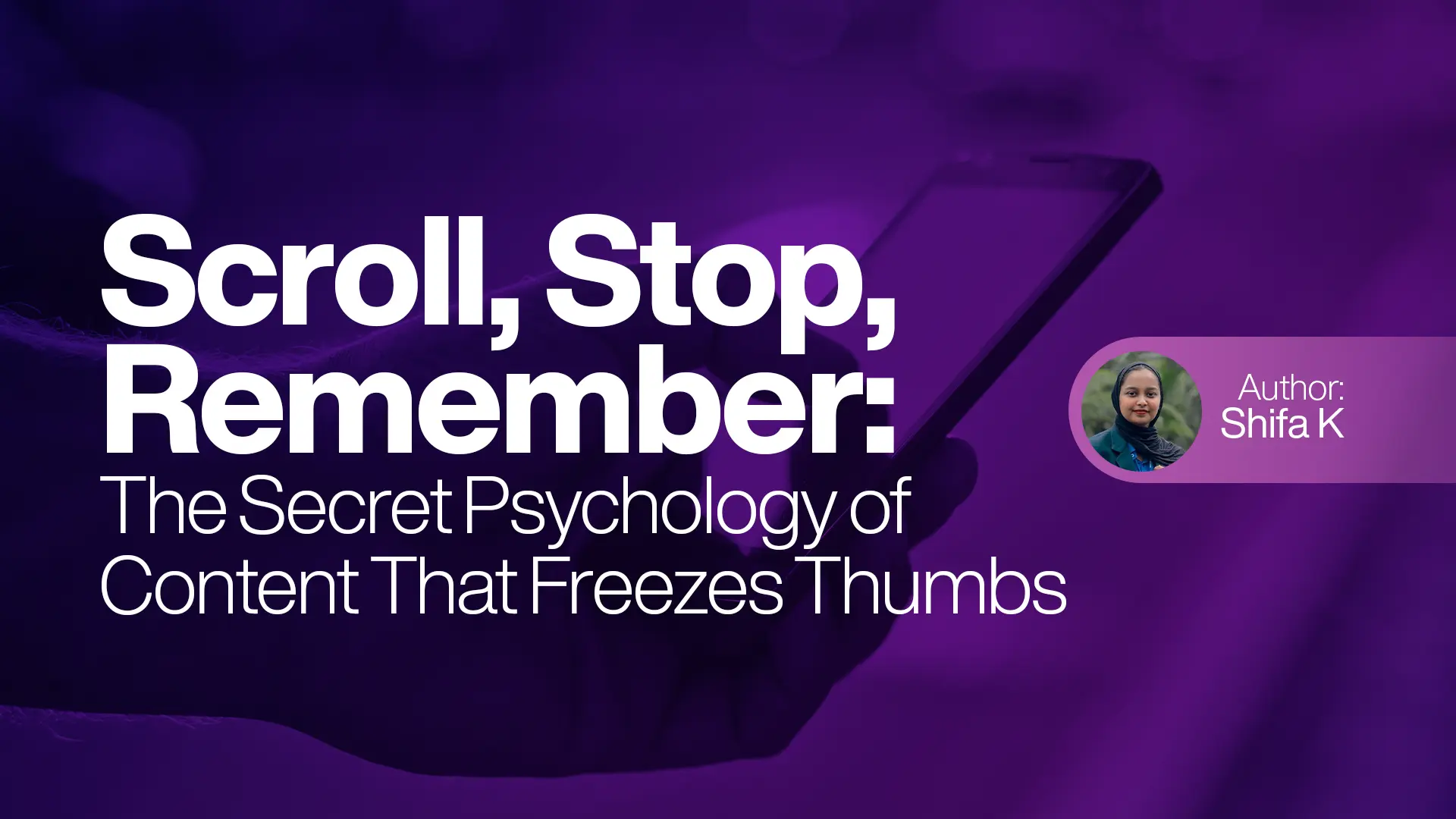
Scroll through Instagram or YouTube for five minutes and count how many ads you actually remember. Probably not many. People see thousands of ads every week, and most of them get scrolled past without a second thought.
So how do some brands manage to stop the scroll every single time?
The answer isn't luck. It's psychology. Once you understand a few basics of how the human brain reacts to what it sees, you can use that same thinking to make your own ads stand out, even if you're just starting out in marketing.
Neuromarketing is the study of how our brains actually react to marketing and using that knowledge to create better ads. Instead of just guessing what people might like, neuromarketing looks at what really grabs attention, creates emotion, and pushes someone to take action, like clicking "buy now" or "sign up".
Here's the simple idea behind it: people don't make decisions with logic first. They decide with emotion, then use logic to justify it afterward. A good ad speaks to the emotional, instinctive part of the brain before it tries to convince the logical part.
You don't need a psychology degree or expensive lab equipment to use this. You just need to understand a few patterns, and that's what this guide covers.
Our brains respond to feelings faster than facts. An ad that makes you feel something, happy, nostalgic, even a little scared, sticks in your memory much longer than an ad that just lists product features.
This is why insurance commercials often show families reuniting and why pet brands love using puppies and kittens in their ads. It's not random. It works because emotion creates connection, and connection makes people remember (and trust) a brand.
How to use it: Before writing ad copy, ask yourself: "What feeling do I want someone to have in the first two seconds?" Then build the visual and the words around that one feeling, instead of trying to say everything at once.
Colors don't just look nice; they change how we feel and act, often without us even noticing. Marketers rely on this constantly:
How to use it: Pick one color for your call-to-action button that contrasts with the rest of your ad, so it's the first thing the eye lands on.
Our brains process images much faster than text. That means people decide whether to keep looking at your ad before they've read a single word.
Companies like Google use tools like eye-tracking to study exactly where people look first on a page or ad, usually faces, bold colors, and anything that moves. This data helps them decide where to place the product, the headline, and the button.
Visual hierarchy just means guiding the eye on purpose: biggest and boldest first (usually the product or the offer), then supporting details, then the call-to-action last, so it's the final thing someone sees right before they decide to click.
How to use it: Look at your ad and ask, "What's the very first thing someone's eyes will land on?" If it's not your main message, rearrange it.
Nobody likes the feeling of missing out on something good. That's why phrases like "Only 3 left in stock" or "Offer ends in 24 hours" work so well: they turn a slow maybe into a fast yes.
This taps into a well-known part of how our brains work called loss aversion: we feel the pain of losing something more strongly than the pleasure of gaining something. A limited-time deal makes "not buying" feel like a loss, not just skipping a purchase.
How to use it: Only use real scarcity, a real limited stock number, and a real deadline. Fake urgency (like a "sale" that never actually ends) damages trust fast, especially with younger, more skeptical audiences.
We naturally trust what other people already trust. If you're choosing between two products and one has 500 five-star reviews, you'll probably pick that one, even if you've never heard of the brand before.
This is called social proof, and it's one of the most powerful tools in digital advertising. Star ratings, customer photos, testimonials, and "10,000+ happy customers" badges all do the same job: they let someone else's experience do the convincing for you.
How to use it: If you have even a handful of genuine reviews or a customer photo, use it. Real, specific proof (a name, a photo, a real quote) works far better than a vague claim like "everyone loves this".
Facts tell, but stories sell. Our brains are wired to remember stories far better than a list of product features, because a story lets us imagine ourselves in it.
Instead of saying "This blender has a 1000-watt motor," a story-driven ad might show someone rushing out the door, making a smoothie in 30 seconds flat, and getting to work on time. Same information, but now it's a moment the viewer can picture themselves in.
How to use it: Turn your product's biggest benefit into a 5-second "before and after" moment. What was frustrating before? What does it look like after?
This is a fair question to ask and a good one. Using psychology to shape ads can sound manipulative if it's used the wrong way.
The line comes down to this: neuromarketing is ethical when it helps a real customer discover something genuinely useful to them and unethical when it tricks someone into a decision that isn't actually good for them. Using color psychology to make a "Sign Up" button easier to notice? Fine. Using fake countdown timers or fake stock numbers to pressure someone? Not fine, and increasingly, audiences (especially younger ones) can spot it and lose trust fast.
A simple rule: if you'd be comfortable explaining exactly why you designed an ad the way you did, you're probably on the right side of that line.
You don't need an EEG headset or an eye-tracking lab to apply any of this. Those are tools big brands like Coca-Cola and Google use for advanced research, but the underlying principles work just as well without them.
If you're a small business owner, a content creator, or just starting out in marketing, here's how to apply neuromarketing with zero research budget:
The goal isn't perfect data. It's just paying attention to how real people actually react, instead of guessing.
Neuromarketing isn't about tricking people. It's about understanding how people naturally think and feel and designing ads that respect that instead of fighting it. Start small: pick just one technique from this list, maybe color psychology or a genuine social proof element, and test it on your next ad. You'll likely notice the difference in how people respond before you even look at the data.
Understanding the psychology behind what makes people click is exactly the kind of practical thinking we focus on in CDA's Digital Marketing program. If you're building your own marketing skill set, it's worth exploring.