


SEO
Why Your Page Is Indexed But Still Not Ranking on Google


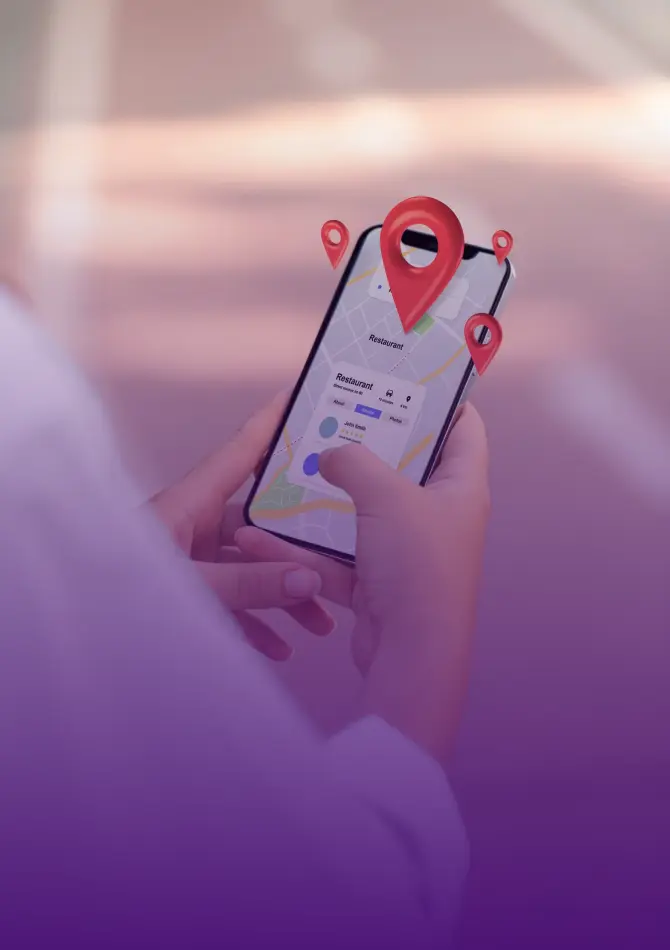
It is a busy Friday evening in Kochi. A man is driving home and feels hungry. He does not stop to type on his laptop. He just picks up his phone and asks it a question out loud.
"Nearby biryani evide kittum?"
In seconds, his phone shows him a few places close by. He picks one, taps for directions, and reaches there in ten minutes.
This is not something that might happen in the future. It is already happening every day, all over Kerala. And it is changing how local businesses need to show up online.
A few years ago, it was enough for a business to rank for a keyword like "bakery in Thrissur" or "architect in Ernakulam." That covered the whole city, and that felt good enough.
Today, that is not good enough anymore.
People do not want the best bakery somewhere in the city. They want the best bakery they can reach on foot or within a few minutes by bike or car. This is called hyper-local search, and it is much narrower than city-wide search.
Hyper-local search cares about things like:
When someone searches for "pharmacy open now near me," they usually want to visit or call right away. These searches often turn into real customers fast, because the person is already ready to act. A business that only targets broad, city-wide keywords is missing out on this easy, ready-to-buy traffic.
Kerala has a habit that makes voice search here a little different from other places. People naturally mix Malayalam and English when they speak, and that includes when they talk to their phone. This mix is often called Manglish.
Here are a few examples of how people actually search by voice:
Notice something important. These are not short, robotic keywords like "biryani Calicut." They are full, natural sentences, the way a person would actually talk to a friend.
If a business website is only built around short English keywords, Google may find it harder to match that website to these natural, spoken searches. Writing content in the same way people actually talk and ask questions helps a business show up more often as the answer, especially when a voice assistant reads out a result aloud.
Showing up for voice search is only half the job. Once Google finds a business, it still has to decide whether that business deserves to be shown first. Google mainly looks at three things.
Relevance: How well does the business match what the person is searching for?
Distance: How close is the business to the person searching?
Prominence: How well-known and trusted is the business online?
A business can improve all three of these with steps like:
Keeping the business address correct and consistent everywhere online
Mentioning nearby landmarks in website content, like "near Lulu Mall" or "opposite Medical College"
These small, honest steps make it much easier for Google to trust and recommend a business for local and voice searches.
Most people are searching for local businesses while they are out and about, on their phone, not sitting at a computer. This means even a business that ranks well can lose customers if its website is slow or confusing on mobile.
A mobile-friendly local website should have:
The businesses winning hyper-local search in Kerala are usually not the ones spending the most on ads. They are the ones who understand how local people search and speak and who make it effortless for a customer to reach them.
What is hyper-local SEO?
It means optimising a website so it shows up for searches within a very small area, like a neighbourhood or a few streets, instead of an entire city.
Why does voice search matter for local businesses in Kerala?
Many people in Kerala speak in Manglish when they search by voice. Websites written in natural, conversational language are more likely to match these searches.
Does hyper-local SEO help small businesses without big budgets?
Yes. It often helps small, local businesses more than large ones, because it rewards accurate details, real reviews, and neighbourhood-specific content rather than big ad spends.
Search behaviour in Kerala has shifted from broad, city-wide searches to quick, spoken, hyper-local ones. Customers now expect fast, nearby answers, and they often speak in Manglish rather than typing in English.
Businesses that update their local details, write in natural language, and keep their website mobile-friendly are the ones showing up when it matters most, right when a nearby customer is ready to visit or call.
If your business wants a closer look at how it currently shows up in local and voice search, a simple local SEO audit can point out exactly where the gaps are and what to fix first.
If you want to build these skills properly, with hands-on practice and real feedback, CDA Academy's digital marketing courses cover SEO, AEO, and content writing in depth, with campuses in Calicut and Kochi.