


SEO
Your Competitor Doesn't Rank #1, So Why Does AI Recommend Them?

Picture this: you're sick, and two people are giving you advice. One is a friend who skimmed an article online. The other is a doctor who has treated patients for 10 years. Whose advice would you follow?
The doctor's, obviously.
That's basically the test Google runs before deciding which websites land in front of you. Keywords aren't enough on their own. Underneath everything, Google is trying to figure out one simple thing: does this source deserve to be believed?
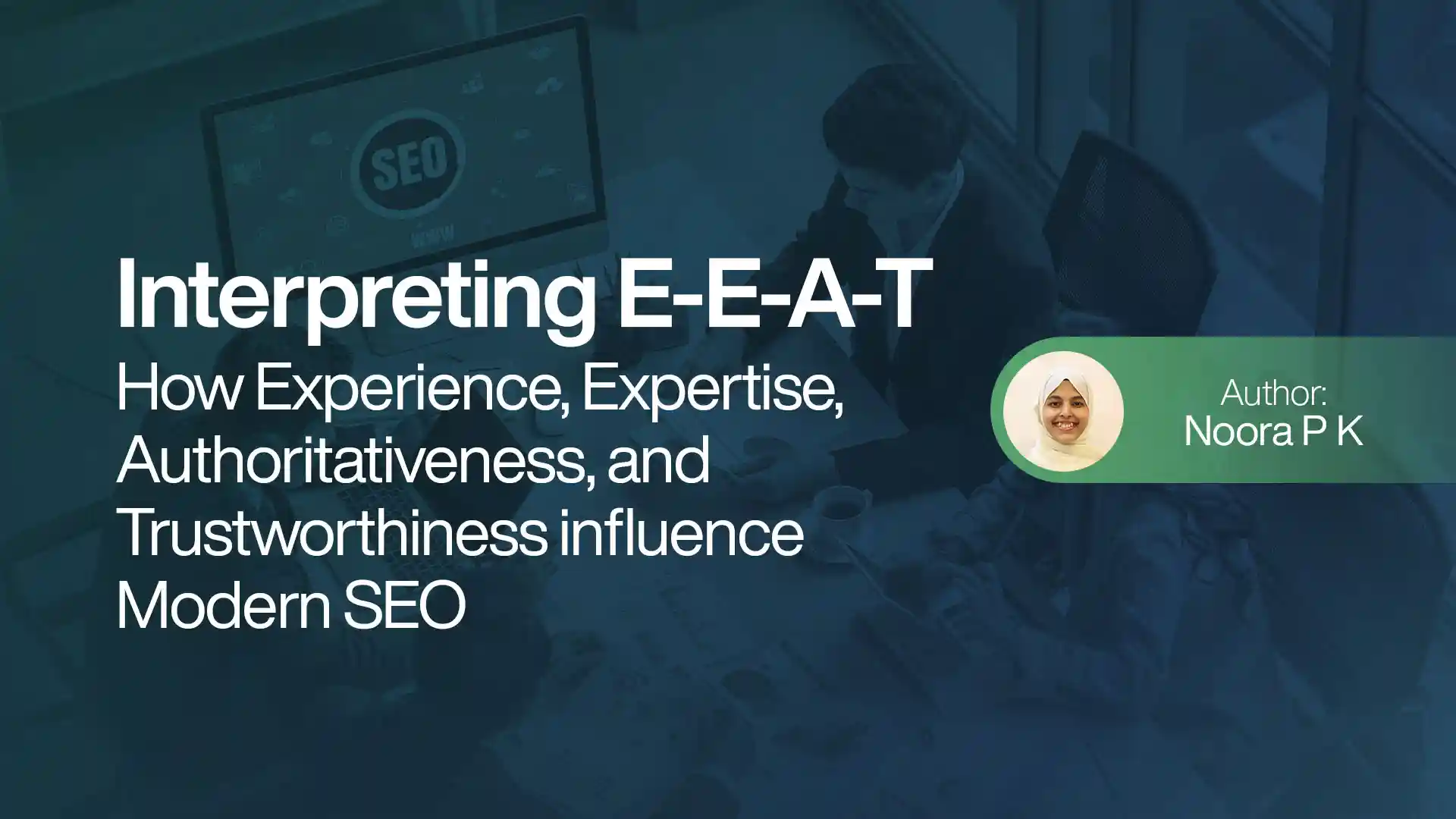
Google has a name for how it figures that out: E-E-A-T. Whether digital marketing is something you're studying or you simply want people to find your blog or site through a search, this is one concept worth truly getting your head around. Here's what it means, in plain, simple terms.
E-E-A-T is short for four things:
Google uses these four ideas to decide how much weight to give a piece of content when ranking search results. This isn't guesswork on our part either; Google publishes its own guidance for the human reviewers who check search quality, and E-E-A-T sits right at the center of it.
Quick update: In 2026, Google started leaning even harder on "Experience" specifically. Content from someone who has lived through what they're describing, not just researched it secondhand, tends to perform better now. So this isn't a dusty old theory. Right now, in 2026, it counts for more than it used to.
Experience simply means you've lived through the thing you're writing about, not just read up on it.
Example: Picture two blog posts on "how to lose weight."
Post B feels more real, and readers pick up on that instantly. Google notices the difference too.
How to show experience in your own content:
Expertise is about depth. It comes from studying something, training in it, or simply doing it for years until it clicks.
Example: A dentist writing about tooth care brings genuine expertise. Someone who patched their post together from a handful of other sites, even one with zero factual errors in it, has not shown that same depth.
How to show expertise:
Here's the part people often get wrong: you can't grant yourself authority. It's something others hand to you.
Example: Picture five well-known websites in your niche linking to your post and calling it a must-read. That's authority in action. If nobody outside your own site ever references your work, Google has little reason to treat you as a big name in your field, no matter how good your work actually is.
How to build authority over time:
Out of all four, this one carries the most weight. You could have years of experience and deep knowledge, but if readers doubt what you're telling them, none of that matters.
Example: A site that throws out bold claims with nothing to back them, hides its author, or looks broken and unsafe will lose a visitor's trust within seconds, regardless of how polished the writing is.
How to build trust:
If you're learning digital marketing, E-E-A-T isn't something to memorise for a test and forget. It's genuinely how careers, personal brands, and businesses earn people's trust over time.
Try this the next time you post anything online. Ask yourself:
If you can say yes to all four, you're not just writing content that ranks well. You're writing content that genuinely helps someone. That's the whole point.
Next time you sit down to write anything- a blog post, a caption, even a class assignment- try this quick exercise:
Keep doing this, and E-E-A-T stops feeling like an SEO checklist and starts feeling like what it really is: just honest, thoughtful writing.
This article was written as part of a hands-on digital marketing training project at CDA Academy, where learners write and publish real SEO content as part of their coursework.