
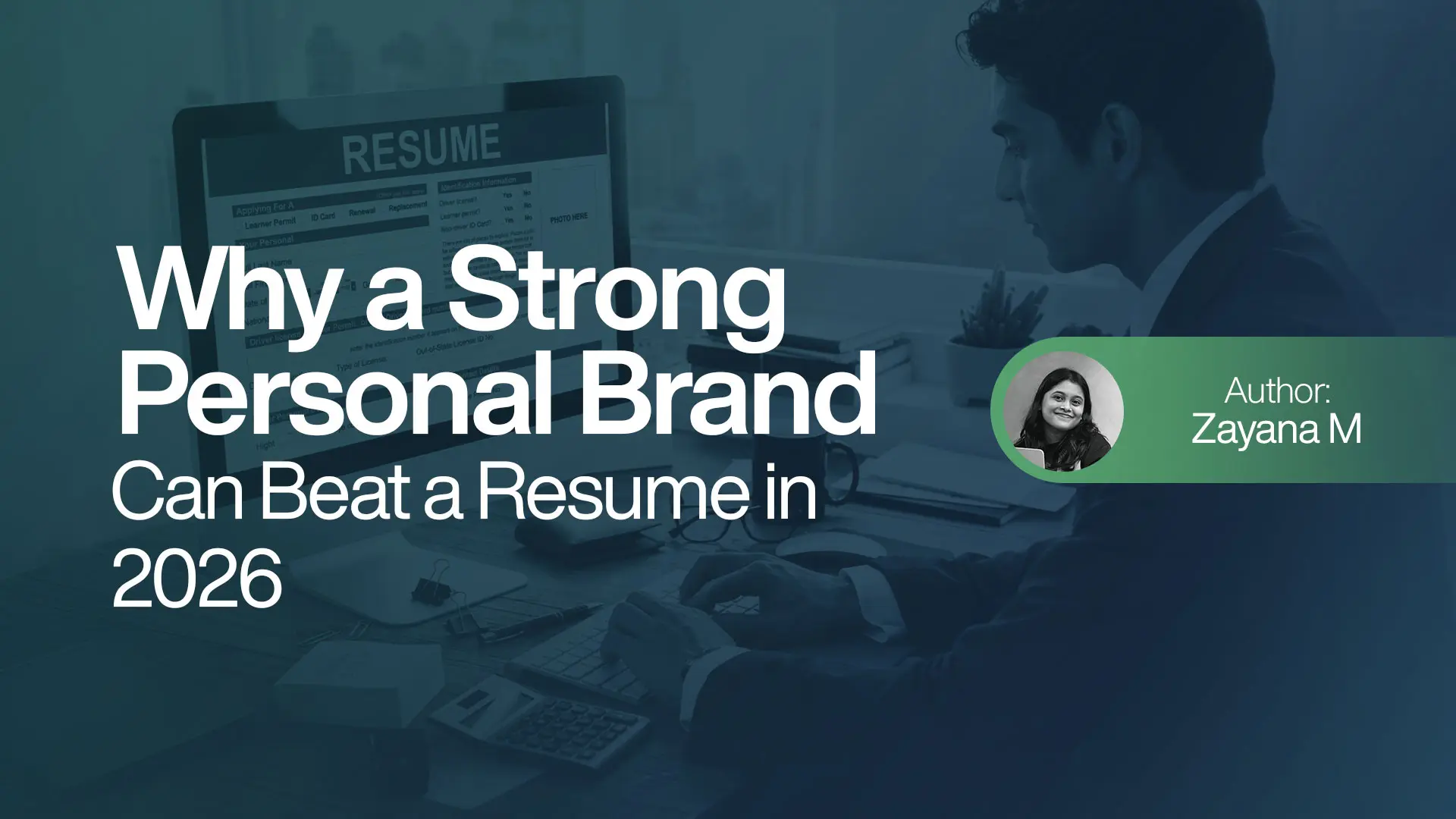
A resume can only say so much. It has a fixed format, a page limit, and no real way to show your personality or how you actually think.
But scroll through someone's LinkedIn posts, or a small portfolio site, or even a few Instagram captions about their work, and you get a much fuller picture. You start to notice how they explain things, what they care about, and what they are actually good at, not just what they claim to be good at.
That difference is becoming harder to ignore. In 2026, the people who get noticed first are often not the ones with the best-formatted resume. They are the ones who left a little proof of their work somewhere online, before anyone even asked for it.
Why Proof Beats Description
A resume is basically a set of claims. "Skilled in social media." "Good with design tools." "Strong communicator." The recruiter has to trust these words.
A personal brand removes the guesswork. If you say you can design, a link to your Instagram grid or Behance page lets someone check that in seconds. If you say you can write, a blog post does the talking for you.
This is exactly why platforms like LinkedIn, Behance, YouTube, and even a simple Instagram page have become unofficial job applications on their own. Recruiters now often check these before they even call for an interview.
The Real Reason Talented People Get Missed
Here is something uncomfortable but true: being good at your work is not the same as being known for it.
Kerala and the Gulf job markets are full of skilled people, freelancers, and homemakers who taught themselves design, career switchers who quietly built new skills on the side. Many of them never get discovered, not because they lack talent, but because nobody outside their close circle knows what they can do.
Now think about someone who shares updates once in a while about a project they completed, a new tool they explored, or a small achievement at work. Over time, people begin to connect that person with a particular skill or area of expertise. So, when an opportunity that matches those skills comes along, they are naturally one of the first people others think of.
That is not simply good fortune. It is the result of consistently showing up and making your work visible.
What Employers Are Actually Screening For Now
Degrees and certificates still open doors, but they rarely close the deal on their own anymore. Along with qualifications, employers are now quietly checking for:
- How you communicate, based on how you write or speak online
- Whether you make time to learn new things and share what you discover.
- Your problem-solving style, based on how you talk through challenges.
- Your online conduct, since this reflects how you might represent their brand.
None of this shows up on a resume. It shows up in a LinkedIn comment, a portfolio caption, or a two-line post about something you just learned.
It Is Not Only About Getting Hired
The value of a personal brand goes far beyond finding a new job. It can create opportunities even when you are not looking for one.
A homemaker starting a small business from home often gets her first few customers because someone saw her page and trusted what she posted, not because of an advertisement. A freelance video editor picks up client work because a producer scrolled past a reel they posted last month. A working professional trying to go independent builds trust faster when people have already seen their work before the first sales call.
People are naturally more comfortable working with someone whose work and ideas they have already come across. A personal brand helps build that sense of familiarity before your first conversation ever happens.
Small Audience, Real Impact
Many people assume that personal branding only works if you have thousands of followers or your posts go viral. Because of this belief, they never take the first step.
In reality, you do not need a huge audience to make an impact. One recruiter, one potential client, or one future business partner discovering your content at the right time can create an opportunity. A small group of people who genuinely follow your work is often far more valuable than a large audience that simply scrolls past your posts.
Instead of focusing on growing your follower count, focus on helping the right people understand what you do and what you do well. Even if only a handful of recruiters, clients, or industry professionals remember your work, your personal brand is already serving its purpose.
Getting Started Does Not Require a Big Plan
You do not need a professional camera, a fancy website, or a content calendar to begin. A simple, honest starting point works better than a perfect one you never publish.
A practical way to begin:
- Choose one platform that matches your goals and focus your efforts there. For many professionals, LinkedIn is a great place to start.
- Write one post about something you recently learned or worked on.
- Add a short project, sample, or write-up that people can view.
- Repeat this once every week or two instead of trying to post every day.
- Focus on being consistent rather than trying to make every post perfect.
Momentum matters more than volume here. A few honest posts over months build more trust than a burst of activity that stops after a week.
The Bigger Shift Happening in 2026
Hiring, freelancing, and even small business growth are all leaning toward one pattern: people trust what they can verify. A resume is a claim. A portfolio, a blog, or a consistent online presence is evidence.
Building a personal brand alongside your resume does not replace your qualifications. It backs them up with something a recruiter or client can actually see and judge for themselves.
The people who get remembered later are usually not the ones with the longest resume. They are the ones whose work someone had already seen before they even applied.
Frequently Asked Questions
What exactly counts as a personal brand?
It is simply how people perceive your skills and work when they look you up online. This could be a LinkedIn profile, a small portfolio, a blog, or even a consistent Instagram page showing your work.
How often should I post to see results?
There is no ideal posting schedule that works for everyone. The key is to keep showing up regularly. Sharing useful content every week or two over a longer period is usually more effective than posting frequently for a short time and then disappearing.
Can a strong personal brand replace a resume completely?
Not entirely. Most formal applications still require a resume. Think of a personal brand as support that makes your resume more believable, not a replacement for it.
Is it too late to start if I have no online presence at all right now?
No. Everyone starts with zero followers and zero posts at some point. What matters is starting now and staying consistent from here.
Building a personal brand becomes a lot easier once you have real, job-ready skills to show off. CDA Academy's courses in content writing, design, video editing, and digital marketing are built to help you create work worth showcasing, right from your first project.